
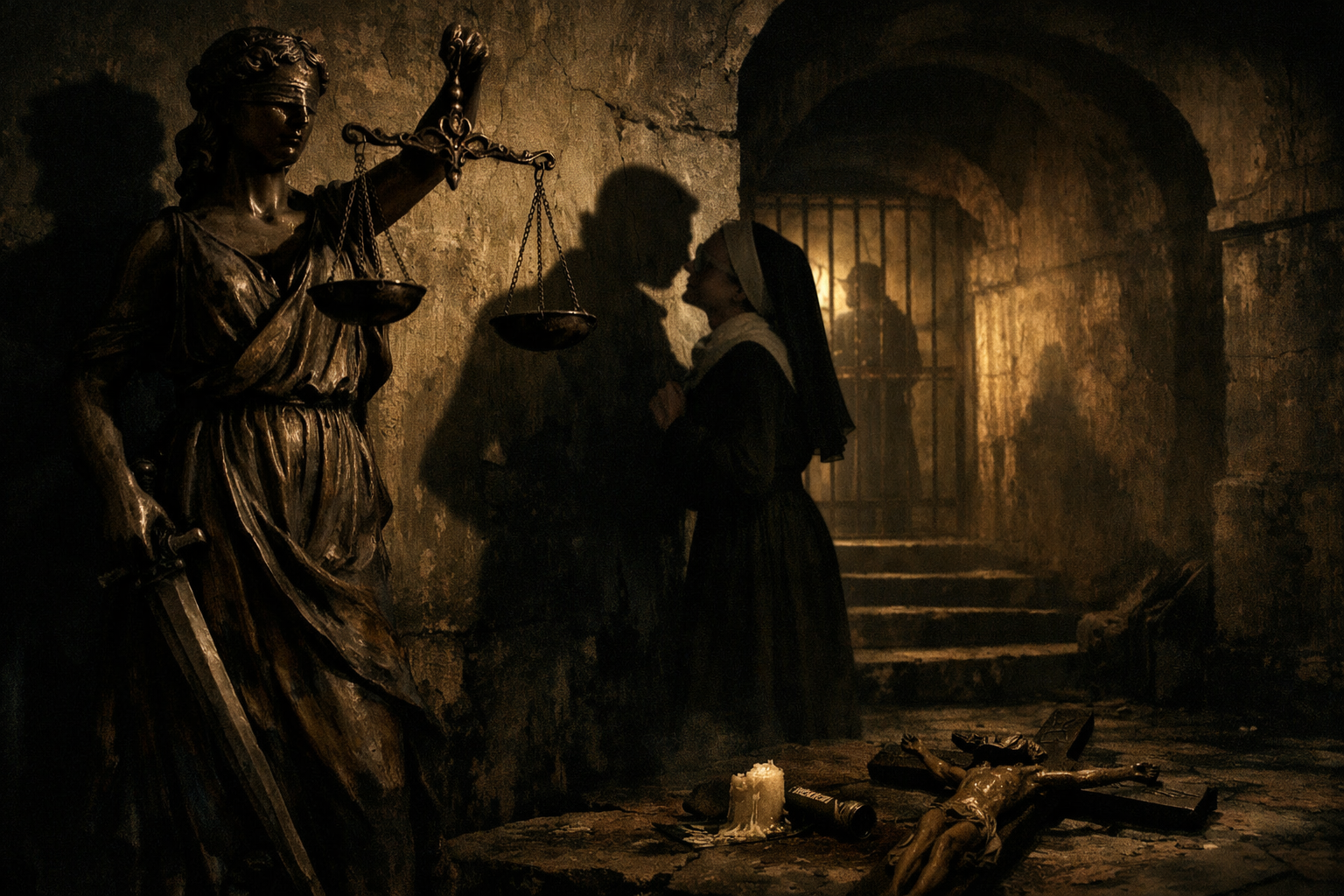
Measure for Measure is one of Shakespeare’s most unsettling plays because it stages moral authority as something contingent, compromised, and strangely hollow. Vienna becomes a laboratory for judgment, yet the more the characters invoke law, the less secure ethical certainty appears. This unstable relation between justice and mercy makes the play essential to any discussion of Shakespearean nihilism.
At the center is a world where public discipline and private appetite refuse to align. Angelo presents himself as austere principle, yet his hypocrisy reveals how quickly moral language can mask desire. Claudio’s predicament, meanwhile, exposes how arbitrary punishment can feel when life is reduced to legal calculation. Like Hamlet, the play is saturated with hesitation, but here the hesitation belongs to institutions as much as individuals.
What makes Measure for Measure particularly resonant with other plays on this site is its use of disguise and substitution. Authority is staged, not grounded; mercy becomes a negotiated performance; identity itself looks theatrical. These concerns link the play to Twelfth Night in another register, but within the darker arc of the blog it aligns more strongly with the moral confusion of King Lear and the spiritual vacancy of Timon of Athens. The human order persists, but its foundations look disturbingly thin.
Shakespeare does not present nihilism here as a triumph of despair. Instead, he shows a society where moral categories can be spoken yet not trusted. The play asks whether law without wisdom is only another form of emptiness. That question reverberates through the tragedies, where the gap between principle and reality often opens into ruin.
Leave a Reply