
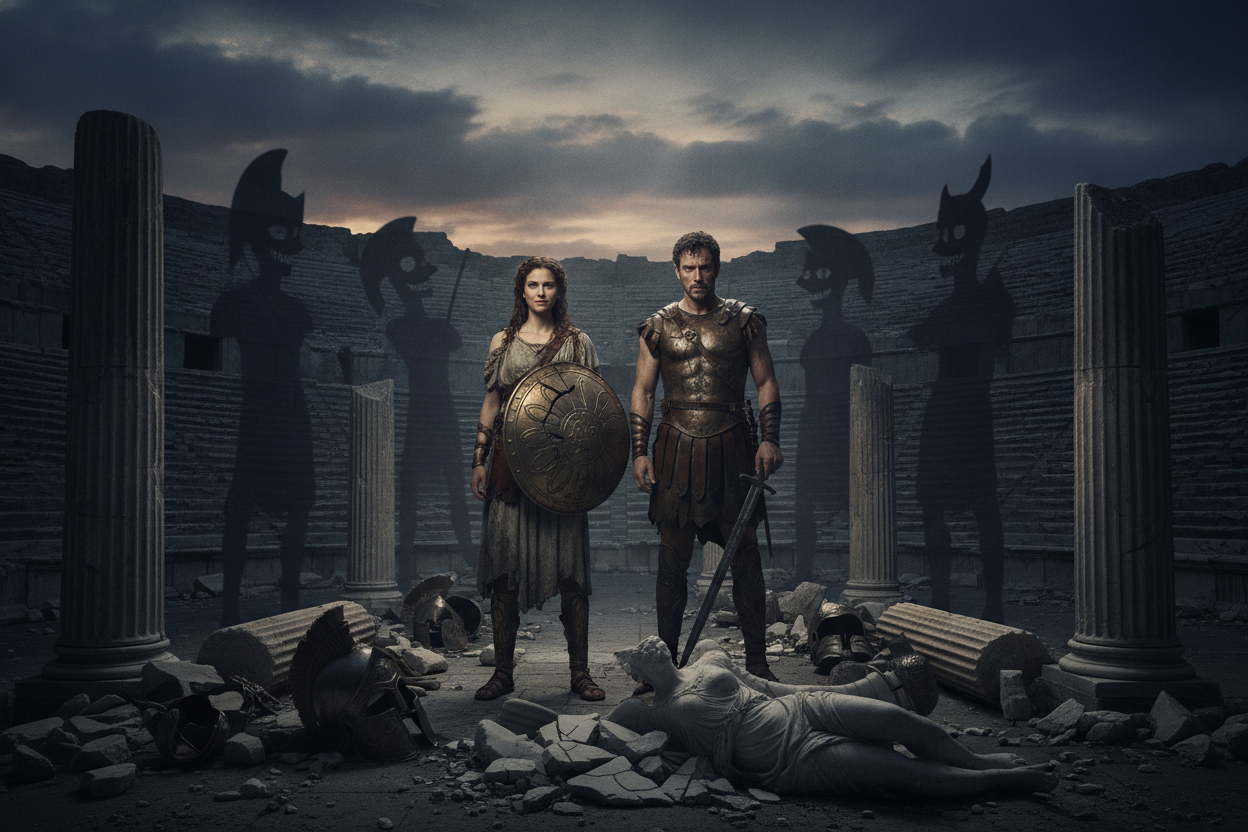
Troilus and Cressida is perhaps Shakespeare’s most sustained assault on heroic meaning. The Trojan War, normally a theater of honor and grandeur, becomes a site of fatigue, vanity, and rhetorical exhaustion. Every claim to greatness seems overripe, and every ideal is exposed as conditional. For readers interested in nihilism, this is one of Shakespeare’s most corrosive works because it drains value from the categories that usually support epic meaning.
The characters speak in a world where language itself is already compromised. Lovers, soldiers, and kings all sound as though they know too much to believe their own scripts. This produces a kind of intellectual cynicism that differs from Hamlet’s grief or Macbeth’s guilt. In Troilus and Cressida, doubt becomes atmosphere. It infects romance, politics, and even memory. The result is a play where action continues but conviction does not.
Shakespeare’s handling of reputation is especially revealing. Heroes are praised and mocked in the same breath, and the famous figures of antiquity appear diminished by exposure. That collapse of heroic value makes the play a vital companion to Julius Caesar, where public language also swells beyond its substance, and to Timon of Athens, where social worth proves equally unstable. Together, these plays suggest that civilization’s most honored forms may conceal a hollow core.
Yet the play is not merely despairing. Its intelligence is what makes it compelling. Troilus and Cressida sees through illusion with ruthless precision, and that precision becomes its own kind of tragic knowledge. The play asks what remains when ideals fail not in one catastrophic instant, but through gradual corrosion. In Shakespeare’s theater of nihilism, that may be the bleakest question of all.
Leave a Reply